Aamdani Atthanni Kharcha Rupaiya (2001)

Star: Govinda ... Bhimsha Juhi Chawla ... Jhoomri Tabu ... Meena Chandrachur Singh ... Ravi Johnny Lever ... Appu Khote .........

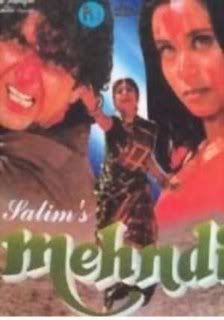
Mehndi (1998)

Star: Faraaz Khan ... Niranjan Chaudhary Rani Mukherjee ... Pooja (as Rani Mukherji) Ushma Rathod Shakti Kapoor ... Banne Miya Arjun ... Billoo Joginder Shelly ... Police Inspector Bhisham (as Joginder)

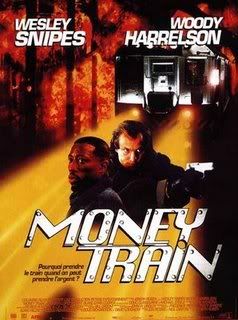
Money Train (1995) (In Hindi)

Star: Wesley Snipes ... John Woody Harrelson ... Charlie Jennifer Lopez ... Grace Santiago Robert Blake ... Donald Patterson Chris Cooper ... Torch Joe Grifasi ... Riley Scott Sowers ... Mr. Brown Skipp Sudduth ... Kowalski

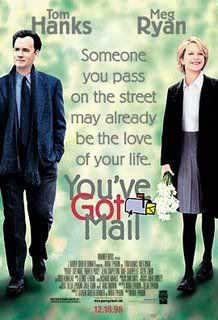
You've Got Mail (1998) (In Hindi)

Star: Tom Hanks ... Joe Fox Meg Ryan ... Kathleen Kelly Katie Sagona ... Young Kathleen Kelly Greg Kinnear ... Frank Navasky Parker Posey ... Patricia Eden Jean Stapleton ... Birdie Conrad Steve Zahn ... George Pappas Heather Burns ... Christina Plutzker

Mazaaq (1975)

Posted by 1213 On 10:43 PM

Star: Vinod Mehra ... Vinod Moushumi Chatterjee ... Moushumi Mehmood ... Raja Aruna Irani ... Dr. A. Irani Iftekhar ... Moushumi's Father Bhagwan G. Asrani ... Murali / Marlon Kanhaiyalal ... Murali's Father Agha ... Gaylord Hotel Manager

Showing posts with label c. Show all posts


Book Details

Paperback: 274 pages
Publisher: Prentice Hall PTR; 2 edition (April 1, 1988)
Language: English
ISBN-10: 0131103628
ISBN-13: 978-0131103627


Just about every C programmer I respect learned C from this book. Unlike many of the 1,000 page doorstops stuffed with CD-ROMs that have become popular, this volume is concise and powerful (if somewhat dangerous) -- like C itself. And it was written by Kernighan himself. Need we say more?

Book Info
Describes C as defined by the ANSI standard. Meant to help the reader learn how to program in C. Examples included. Paper. DLC: C (Computer program language)

The publisher, Prentice-Hall ECS Professional
This second editon describes C as defined by the ANSI standard. This book is meant to help the reader learn how to program in C. The book assumes some familiarity with basic programming concepts like variables, assignment statements, loops, and functions. A novice programmer should be able to read along and pick up the language.

From the Inside Flap
Preface
The computing world has undergone a revolution since the publication of The C Programming Language in 1978. Big computers are much bigger, and personal computers have capabilities that rival the mainframes of a decade ago. During this time, C has changed too, although only modestly, and it has spread far beyond its origins as the language of the UNIX operating system.

The growing popularity of C, the changes in the language over the years, and the creation of compilers by groups not involved in its design, combined to demonstrate a need for a more precise and more contemporary definition of the language than the First edition of this book provided. In 1983, the American National Standards Institute (ANSI) established a committee whose goal was to produce "an unambiguous and machine-independent definition of the language C," while still retaining its spirit. The result is the ANSI standard for C.

The standard formalizes constructions that were hinted at but not described in the first edition, particularly structure assignment and enumerations. It provides a new form of function declaration that permits cross-checking of defini-tion with use. It specifies a standard library, with an extensive set of functions for performing input and output, memory management, string manipulation, and similar tasks. It makes precise the behavior of features that were not spelled out in the original definition, and at the same time states explicitly which aspects of the language remain machine-dependent.

This second edition of The C Programming Language describes C as defined by the ANSI standard. Although we have noted the places where the language has evolved, we have chosen to write exclusively in the new form. For the most part, this makes no significant difference; the most visible change is the new form of function declaration and definition. Modern compilers already support most features of the standard.

We have tried to retain the brevity of the first edition. C is not a big language, and it is not well served by a big book. We have improved the exposition of critical features, such as pointers, that are central to C programming. We have refined the original examples, and have added new examples in several chapters. For instance, the treatment of complicated declarations is augmented by programs that convert declarations into words and vice versa. As before, all examples have been tested directly from the text, which is in machine-readable form.

Appendix A, the reference manual, is not the standard, but our attempt to convey the essentials of the standard in a smaller space. It is meant for easy comprehension by programmers, but not as a definition for compiler writersÑ that role properly belongs to the standard itself. Appendix B is a summary of the facilities of the standard library. It too is meant for reference by programmers, not implementers. Appendix C is a concise summary of the changes from the original version.

As we said in the preface to the first edition, C "wears well as one's experience with it grows." With a decade more experience, we still feel that way. We hope that this book will help you to learn C and to use it well.Brian W. Kernighan, Dennis M. RitchiePreface to the First Edition

C is a general-purpose programming language which features economy of expression, modern control flow and data structures, and a rich set of operators. C is not a "very high level" language, nor a "big" one, and is not specialized to any particular area of application. But its absence of restrictions and its generality make it more convenient and effective for many tasks than

supposedly more powerful languages.

C was originally designed for and implemented on the UNIX operating sys-tem on the DEC PDP-1 1, by Dennis Ritchie. The operating system, the C compiler, and essentially all UNIX applications programs (including all of the software used to prepare this book) are written in C. Production compilers also exist for several other machines, including the IBM System/370, the Honeywell 6000, and the Interdata 8/32. C is not tied to any particular hardware or system, however, and it is easy to write programs that will run without change on any machine that supports C.

This book is meant to help the reader learn how to program in C. It contains a tutorial introduction to get new users started as soon as possible, separate chapters on each major feature, and a reference manual. Most of the treatment is based on reading, writing and revising examples, rather than on mere statements of rules. For the most part, the examples are complete, real programs, rather than isolated fragments. All examples have been tested directly from the text, which is in machine-readable form. Besides showing how to make

effective use of the language, we have also tried where possible to illustrate useful

algorithms and principles of good style and sound design.

The book is not an introductory programming manual; it assumes some familiarity with basic programming concepts like variables, assignment statements, loops, and functions. Nonetheless, a novice programmer should be able to read along and pick up the language, although access to a more knowledgeable colleague will help.

In our experience, C has proven to be a pleasant, expressive, and versatile language for a wide variety of programs. It is easy to learn, and it wears well as one's experience with it grows. We hope that this book will help you to use it well.Brian W. Kernighan, Dennis M. Ritchie

Back Cover Copy
This book is meant to help the reader learn how to program in C. It is the definitive reference guide, now in a second edition. Although the first edition was written in 1978, it continues to be a worldwide best-seller. This second edition brings the classic original up to date to include the ANSI standard.

From the Preface:

We have tried to retain the brevity of the first edition. C is not a big language, and it is not well served by a big book. We have improved the exposition of critical features, such as pointers, that are central to C programming. We have refined the original examples, and have added new examples in several chapters. For instance, the treatment of complicated declarations is augmented by programs that convert declarations into words and vice versa. As before, all examples have been tested directly from the text, which is in machine-readable form.

As we said in the first preface to the first edition, C "wears well as one's experience with it grows." With a decade more experience, we still feel that way. We hope that this book will help you to learn C and use it well.


About the Author

Brian W. Kernighan works in the Computing Science Research Center at Bell Laboratories, Lucent Technologies. He is Consulting Editor for Addison-Wesley's Professional Computing Series and the author, with Dennis Ritchie, of The C Programming Language.


Dennis Ritchie is a computer scientist notable for his influence on ALTRAN, B, BCPL, C, Multics, and Unix.


For more free books download visit this blog daily


Download

OR

Download

OR

Download

OR

Download

OR

Download

OR

Download


.
| edit post

Let Us C by Yashavant Kanetkar

Posted by 1213 On 1:06 PM 0 comments


Book Details

Paperback
Publisher: BPB Publications; 5Rev Ed edition (November 30, 2004)
ISBN-10: 8176569402
ISBN-13: 978-8176569408


The 8th updated edition of a classic considered a foundation work in C programming is now available, and any college-level or technical library strong in C programming will find the new edition has been extensively edited, revised, and updated, complete with a CD-ROM added with more examples. From hundreds of step-by-step examples and exercises for self-study to a basic coverage focusing on both the latest techniques and introductory material for beginners, LET US C is a reference any computer library must have.

This was the first book that got me started off on C programming, and I would strongly recommend it, provided you don't mind overlooking the author's limited lingual skills and choice of words. (That's the only reason I have rated this with 4 stars instead of a full five.) The best parts of the book are the short concise examples, followed by some really interesting exercises: I would recommend that you do each and every problem listed in the exercises, since they help the beginner programmer to immediately apply the concepts learned, and thus permanently internalize them. The exercises themselves are very interesting and challenging and let you test your mettle.

All in all, a very good _beginner_ level book to begin your career in C programming.


For more free books download visit this blog daily


Download


.
| edit post

C How to Program - Deitel

Posted by 1213 On 12:59 PM 0 comments


Book Details

Paperback: 1312 pages
Publisher: Prentice Hall; Fourth edition (January 28, 2004)
Language: English
ISBN-10: 0131426443
ISBN-13: 978-0131426443


This book is used in FSU's CGS 3408 course: "Introduction to Programming with the C Language." In the preface, the Deitels state that this book is for everyone (beginners to experts) who want to learn C. They've made a very good stab at that goal, but realistically, I'd have to say that those who are professional programmers in other languages will find this book too long for their needs. For beginners (and even those moderately versed in other languages), this is an excellent book. I really have only three minor gripes about it:

- First, throughout the C portion, the book uses scanf as the default for getting user input. Unfortunately, as my compiler warned me constantly (and I verified on the web), scanf has been "deprecated" (I guess that's a fancy way to say don't use it, use something else). Unfortunately, the book talks about alternative IO in only one chapter near the end of the C portion and very rarely uses it. So, this book teaches as a standard an input method that's been superseded.

- Second, and related to the first, the book clumps all IO except for printf and scanf into a single chapter near the end. It would have been a lot better if they had introduced alternative IO a little at a time throughout the book. As it is, my eyes just glazed over when I hit that chapter.

- And, finally, though this might sound weird, there are too many exercises at the end of each chapter. I read through this book on my own and so had no way of choosing which exercises to do. Some of the chapters have over 40 programming exercises. I suppose this is great at a college where the instructors can select different exercises for years without repeating. But, as an individual, I'd have preferred a handful of in-depth exercises focusing on the chapter material instead of a huge number of varied exercises (some of which don't seem to have much bearing on the chapter).

One note about the content of this book: most of it (over half) is dedicated to C. It covers C in detail. The remaining half is equally divided between C++ and Java. The level of detail in those chapters (and the exercises, too) comes nowhere near that in the C portion. If you're interested in C++ or Java, those chunks in this book are good, but you'll really need to read dedicated books to get the full treatment.

Overall, a very good book. Experienced programmers might prefer something more terse, but all others will be pleased. I give it 4 stars out of 5.


For more free books download visit this blog daily


Download


.


Book Details

Paperback: 640 pages
Publisher: No Starch Press; 1 edition (March 18, 2006)
Language: English
ISBN-10: 1593270658
ISBN-13: 978-1593270650


DevX, April 14, 2006
"If you want to know what's really going on with your programs . . . you won't find an easier introduction."

Free Software Magazine, May 9, 2006
"Exceeds its goal of helping developers pay more attention to application performance . . . a must for any high-level application developer."

Book Description
The second volume in the Write Great Code series supplies the critical information that today's computer science students don't often get from college and university courses: How to carefully choose their high-level language statements to produce efficient code. Write Great Code, Volume 2: Thinking Low-Level, Writing High-Level, teaches software engineers how compilers translate high-level language statements and data structures into machine code. Armed with this knowledge, a software engineer can make an informed choice concerning the use of those high-level structures to help the compiler produce far better machine code--all without having to give up the productivity and portability benefits of using a high-level language.

From the Back Cover
No prior knowledge of assembly language required!
In the beginning, most software was written in assembly, the CPU’s low-level language, in order to achieve acceptable performance on relatively slow hardware. Early programmers were sparing in their use of high-level language code, knowing that a high-level language compiler would generate crummy, low-level machine code for their software. Today, however, many programmers write in high-level languages like C, C++, Pascal, Java, or BASIC. The result is often sloppy, inefficient code. You don’t need to give up the productivity and portability of high-level languages in order to produce more efficient software.

In this second volume of the Write Great Code series, you’ll learn:
• How to analyze the output of a compiler to verify that your code does, indeed, generate good machine code
• The types of machine code statements that compilers typically generate for common control structures, so you can choose the best statements when writing HLL code
• Just enough 80x86 and PowerPC assembly language to read compiler output
• How compilers convert various constant and variable objects into machine data, and how to use these objects to write faster and shorter programs

With an understanding of how compilers work, you’ll be able to write source code that they can translate into elegant machine code. That understanding starts right here, with Write Great Code, Volume 2: Thinking Low-Level, Writing High-Level.

About the Author

Randall Hyde is the author of The Art of Assembly Language, one of the most highly recommended resources on assembly, and Write Great Code, Volume 1. He is also the co-author of The Waite Group's MASM 6.0 Bible. He has written for Dr. Dobb's Journal and Byte, as well as professional journals.


For more free books download visit this blog daily


Download


or


download


.
| edit post

Expert C Programming

Posted by 1213 On 5:01 PM 0 comments


Book Details


Paperback: 384 pages
Publisher: Prentice Hall PTR (June 24, 1994)
Language: English
ISBN-10: 0131774298
ISBN-13: 978-0131774292


Defying the stereotypical notion that technical books tend to be boring, Expert C Programming offers a lively and often humorous look at many aspects of C--from how memory is laid out to the details of pointers and arrays. The author reveals his points through invaluable anecdotes, such as stories of costly bugs, and through folklore, such as the contents of Donald Knuth's first publication. Each chapter ends with a section entitled "Some Light Relief," which discusses topics (topics that some may consider to be "recreational"), such as programming contests. A fabulous appendix on job interview questions finishes the book.

From the Back Cover

This is a very different book on the C language! In an easy, conversational style, Peter van der Linden, of Sun's compiler and OS kernel group, presents dozens of astonishing examples drawn from practical experience, including:

Software that blew up the space probe to Venus
The C bug that shut down the entire AT&T phone system
C programmer job interview secrets
Why programmers can't tell Halloween from Christmas day
The C code for a complete BASIC interpreter
Expert C Programming reveals the coding techniques used by the best C programmers. It relates C to other languages, and includes an introduction to C++ that can be understood by an programmer without weeks of mind-bending study. Covering both the IBM PC and UNIX systems, it is an entertaining and educational romp through C showing how experts really use it. Expert C Programming is a must read for anyone who wants to learn more about the implementation, practical use, and folklore of C.

"Not just clearly written, but fun to read. The tone and style of this text should make this a popular book with professional programmers. However, the tone of this book will make it very popular with undergraduates. Appendix A alone would make the purchase of this book a must. It's filled with great advice."
—Professor Jack Beidler, Chairman, Department of Computer Science, University of Scranton
"So that's why extern char *cp isn't the same as extern char cp. I knew that it didn't work despite their superficial equivalence, but I didn't know why. I also love the job interview test questions on C."
—David S. Platt, Rolling Thunder Computing
"In Expert C Programming, Peter van der Linden combines C language expertise and a subtle sense of humor to deliver a C programming book that stands out from the pack. In a genre too often known for windy, lifeless prose, van der Linden's crisp language, tongue-in-cheek attitude, and real-world examples engage and instruct."
—John Barry, author of Sunburst, Technobabble, and other books
For more free books download visit this blog daily


Download


.
| edit post

OpenGL Programming Guide

Posted by 1213 On 10:05 AM 0 comments


Product Details

Paperback: 896 pages
Publisher: Addison-Wesley Professional; 5 edition (August 11, 2005)
Language: English
ISBN-10: 0321335732
ISBN-13: 978-0321335739


The OpenGL Programming Guide, now in its third edition, is the definitive volume for programmers using this evolving graphics interface standard. Written by members of the OpenGL Architecture Review Board, this book offers understandable tutorials and lessons on getting up to speed and getting the most out of the latest version of OpenGL, version 1.2.
The guide uses code examples in C and is targeted at programmers who have experience in coding yet are new to coding for OpenGL applications. The opening chapters go into descriptive detail of how OpenGL, the software interface for hardware 3-D chipsets, works and what you can expect from it, which turns out to be much more than you might have thought. Color plates are used, for example, to show how OpenGL handles such effects as motion blur and depth-of-field blur, in addition to shadows and texture mapping.

This is not a beginner's guide to programming computer graphics. Some previous knowledge of both programming in general and computer graphics in particular is required. For example, code snippets are used to describe how to implement these effects, but because OpenGL is platform-independent, some code examples may need to be modified when used with your specific compiler.

Filled with the expertise of those who standardized OpenGL, there is no better reference volume for learning and understanding this system. The examples cited are clear, commented, and explained. The only drawback to the book is that it lacks a companion CD-ROM--all examples must be either typed in or downloaded from an Internet FTP site. (The URL is listed in the preface.) --Mike Caputo --This text refers to an out of print or unavailable edition of this title.


Product Description


OpenGL is a powerful software interface for graphics hardware that allows graphics programmers to produce high-quality color images of 3D objects. The functions in the OpenGL library enable programmers to build geometric models, view models interactively in 3D space, control color and lighting, manipulate images, and perform such tasks as alpha blending, antialiasing, depth cueing, and texture mapping.

The OpenGL Reference Manual, Second Edition, documents all OpenGL functions, including brand new features recently approved by the OpenGL Architecture Review Board (ARB) for inclusion in OpenGL, Version 1.1. The ARB is an industry consortium responsible for defining OpenGL, composed of such industry leaders as Digital Equipment Corporation, Evans & Sutherland, Hewlett-Packard, Intel, IBM, Intergraph, Microsoft, Sun Microsystems, and Silicon Graphics.

Each reference page fully describes: C specifications, relevant parameters, the effects of functions, possible errors generated by functions, associated effects, Reference pages for the OpenGL Utility Library (GLU) and the OpenGL extension to the X Window System (GLX) are included in this manual. --This text refers to an out of print or unavailable edition of this title.


For more free books download visit this blog daily


Download


.
| edit post


Product details

Paperback: 758 pages
Publisher: John Wiley & Sons; 2nd Edition edition (16 Nov 1995)
Language English
ISBN-10: 0471117099
ISBN-13: 978-0471117094


This new edition of the cryptography classic provides you with a comprehensive survey of modern cryptography. The book details how programmers and electronic communications professionals can use cryptography -- the technique of enciphering and deciphering messages -- to maintain the privacy of computer data. It describes dozens of cryptography algorithms, gives practical advice on how to implement them in cryptographic software, and shows how they can be used to solve security problems. Covering the latest developments in practical cryptographic techniques, this new edition shows programmers who design computer applications, networks, and storage systems how they can build security into their software and systems.


What's New in the Second Edition?

The second edition of Applied Cryptography is a major rewrite of the first edition: 50% more words, 7 more chapters, and over 1600 new references. Not only did I make corrections to the first edition and add developments since it was published, but I also included topics left out of the first edition.
The second edition has lots of new algorithms (including GOST, Blowfish, RC4, and A5), more information on the Clipper Chip and key escrow, dozens of new protocols, more information on how PGP works, detailed information on key management and modes of operation, and new source code.


Corrected Printings

Wiley has published a corrected printing of Applied Cryptography, 2nd ed. They didn't correct everything, only changes that didn't affect page breaks. Still, I counted over 250 individual corrections.
The fifth printing or greater is the corrected version. To find what printing you own, turn to page iv (it's opposite the "Contents in Brief" page). The last line (under "Printed in the United States of America") is a series of numbers, counting down from 10. The lowest number is the printing. For example, you have a fifth printing if your last line looks like:


For more free books download visit this blog daily


Download

OR

Download

OR

Download

OR

Download


.
| edit post

Sams Teach Yourself C in 21 Days

Posted by 1213 On 7:16 AM 0 comments


Product Details

Paperback: 800 pages
Publisher: Sams; 5th edition (October 22, 1999)
Language: English
ISBN-10: 0672317664
ISBN-13: 978-0672317668


Book Description

Sams Teach Yourself C in 21 Days, Fifth Edition presents C programming techniques in a logical and easy-to-follow sequence that helps you understand the principles involved in developing C programs. Learn the basics of writing a program, then move on to arrays, pointers, disk input/output, functions, and more. This book covers the basics of C including variables, constants, conditional statements, loops, pointers, data structures, input/output, and functions. Sams Teach Yourself C in 21 Days, Fifth Edition, presents C in the most logical and easy-to-learn sequence, and is geared towards programmers learning the C language.

Book Info
Provides the perfect starter kit for new C programmers. Includes the basic coverage of Cincluding variables, constants, conditional statements, loops, pointers, data structures, disk input/output, and functions. System Requirements include PC with Intel 486/66MHz, Windows 95+, 24MB RAM, and 225MB available hard disk space. --This text refers to an out of print or unavailable edition of this title.

For more free books download visit this blog daily


Download

OR

Download

OR

Download


.